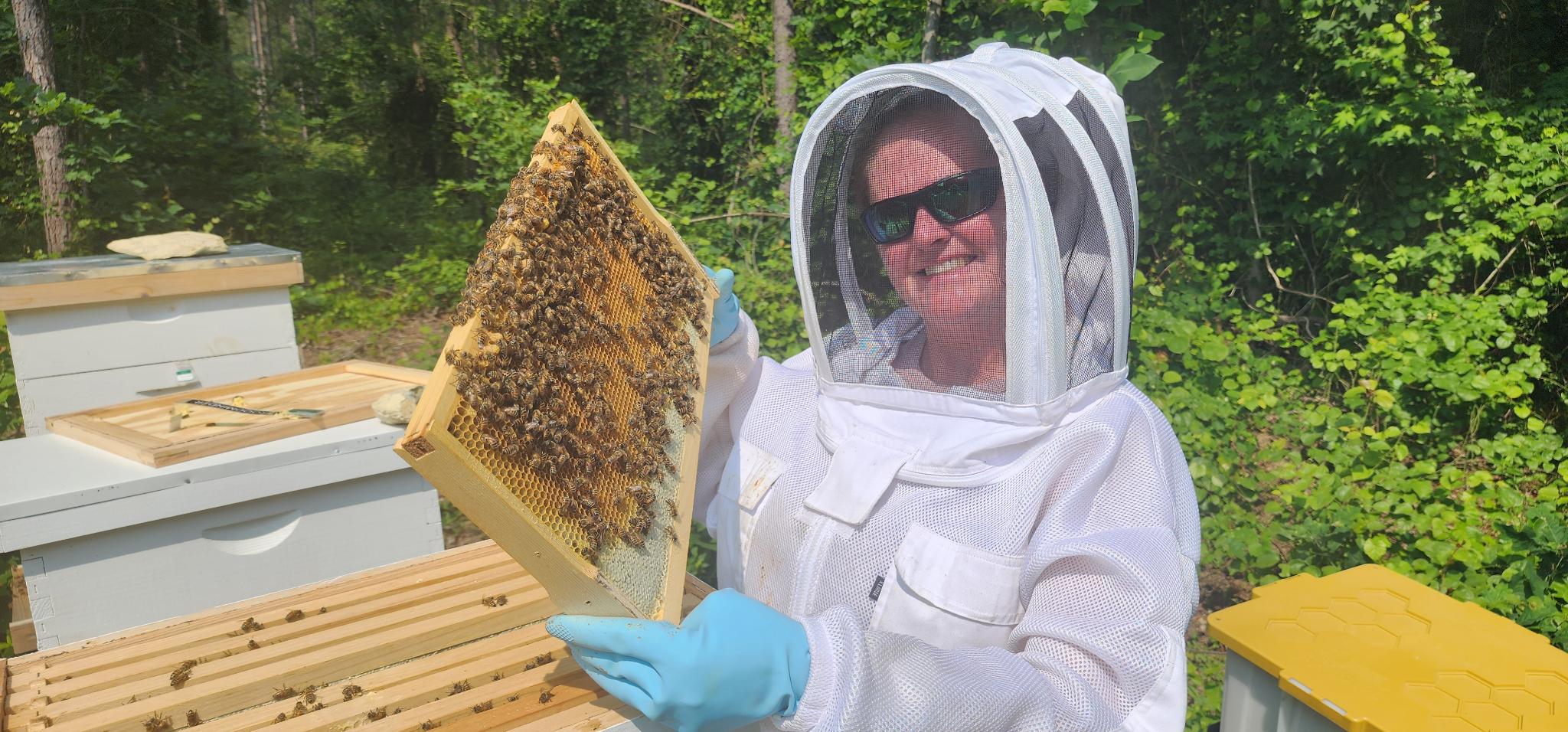
My First Year as Beekeeper
I’m closing in on the end of my first year as a beekeeper. I started the year by doing a lot of research and planning. I read books and articles, attended lectures and even spent time working with an experienced beekeeper in his apiary helping him work his hives. I learned, a lot no doubt, but I was still unprepared for what I needed to be as an effective beekeeper. I learned a few lessons the hard way. There is absolutely no way to prepare yourself for the hot-as-hell’s front porch temperature in that suit in the full sun in mid July, or the first real glimpse of a “spicy” colony in the Fall when they are defending their resources, or a queen that takes a nose dive off the side of hive box a flies into the weeds never to be found.
Early on, I set goals.
I wanted to start with two colonies and see how it went before adding more. My hope was that I would have at least one colony make it through winter and into the next spring.
I decided that with all the options and different methods & equipment out there, I would stay as traditional and mainstream as I could and after I learned and experienced more, I could branch out or deviate later on down the road.
I wanted to collect data. I didn’t want to just guess at what at the bees were doing, I wanted to quantify it. In one of the lectures I attended, I learned that there were sensors and scales that I could purchase that would give me valuable data that I could use to diagnose what was going on inside the hive without having to open it and disrupt the bees. That sounded exciting.
I did not set any goals related to honey collection, as that is not at all likely and not my purpose for starting this venture.
I should probably go into the “why” I became a beekeeper before I get into the rest of this. Lots of people asked me that question. What was I looking to get out of it? I really just have always been fascinated and awed by these tiny creatures. How they live their lives, how they structure their world, how they handle problems, its all so incredibly effective. I just wanted to be around them. Yes, at some point I wanted honey, but not really as business, but as a hobby. I was not looking to make money off my bees. As many will attest, once you start getting bees, you end up making them a big part of your life. Often times that ends up with many keepers becoming full time beekeepers and it eventually becomes a business. My purpose in this venture, is still to just have bees. I love to talk about bees. I love to educate people about people bees. I love to catch wayward swarms and give them a home. I enjoy spending time watching them. They are such amazing creatures.
Ok, back to the story….
December came and it was time to order my bees and my equipment. I was lucky enough to have a bee store local that I could go visit and speak with the owner, an experienced beekeeper. He was very helpful and spent time talking me through the options and helping me choose what equipment made sense and would likely work best for me as a beginner. We settled on two Nucs (instead of packages) that he would go ahead and install in their hives. That way all I had to do was pick them up and take them to their new home. This would take place in mid to late April. I had plenty of time to get their new home ready. My husband and I had just purchased about 40 acres of land that they would be living on. The land was mostly wooded and I would need to pick a spot, level it and set up a foundation for the two hives. I waivered on the spot. Initially, I picked a location but the later changed my mind and ended up moving to another site. This current site has some positives but it also has some drawbacks. It isn’t in full sun all the time. It gets shade in the afternoon during summer and only gets a few hours of full sun in the morning during the winter, thanks to all the tall pine trees near by. Also, I underestimated the amount of preparation the area immediately under and around the hires would need.. I learned that the weeds get out of hand real fast and its really tricky dealing with weeds around spicey bees. I made some temporary modifications like putting down weed paper and artificial turf carpet to give me a place to work but it still wasn’t quite enough. Weed eating in front of the hives got me stung pretty much every time I attempted it. I made a new goal for next year to do more preparation and adjustments to the footing and ground around the hives this winter when the bees are clustering inside the hive. I also plan to move them away from the wood line a little more.
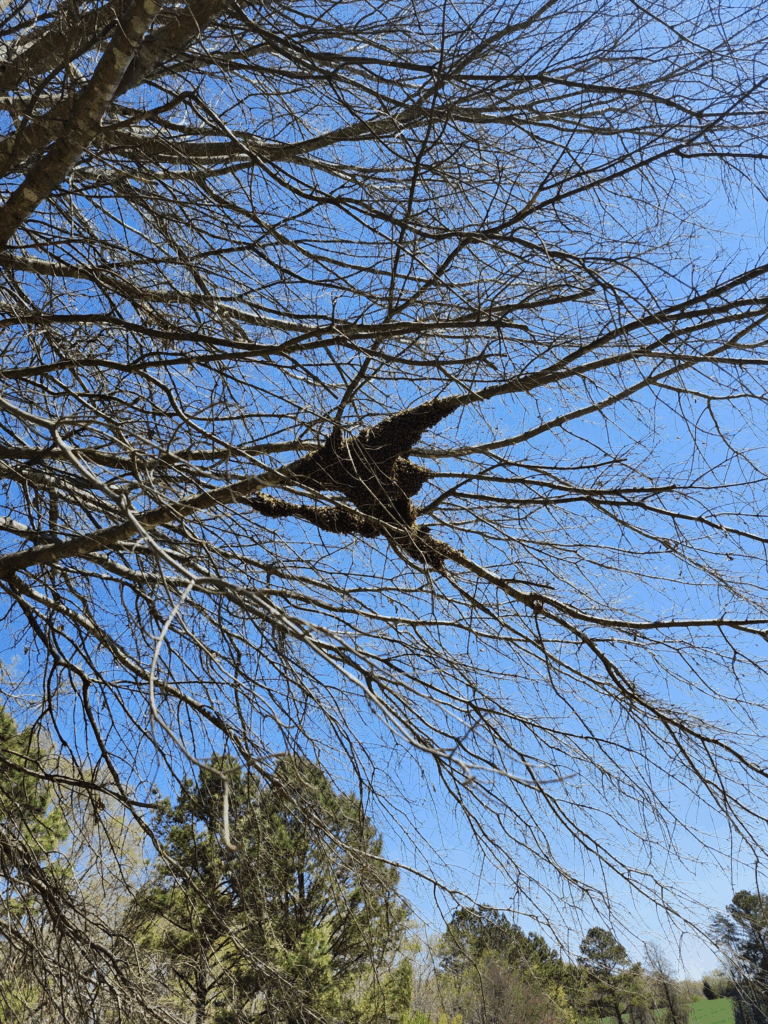
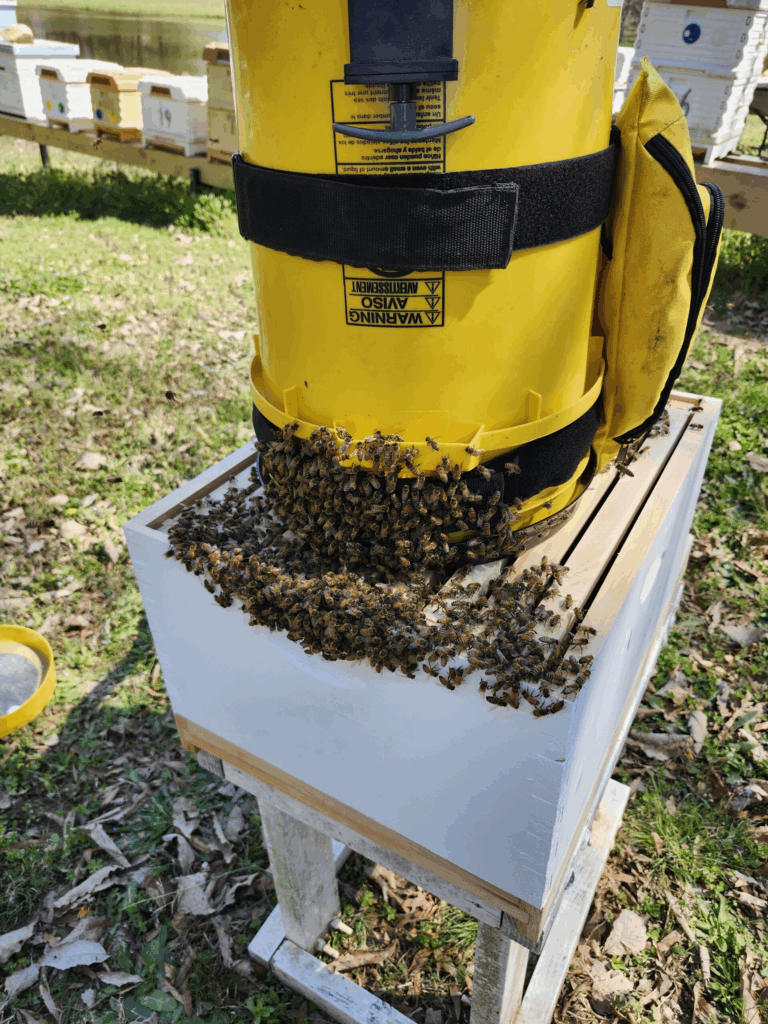
The spring got warm fast a the bees started getting out and moving pretty quick. I went to seek experience from another seasoned beekeeper that needed an extra set of hands. His bees needed tending but he hurt his back and was late getting to them. Because bees wait for no keeper, they started swarming, a lot. So one of the first things I did as an aspiring beekeeper was help catch a swarm. He loaded me up in bucket of his tractor and lifted me into the air with a special bee vacuum and I caught my first swarm. Later that day another hive had swarmed right in front of us. So, I set to work and caught that swarm too. This one earned me my first sting. My veil was pushed flat against my face while I was in the branches and a bee stung me on the tip of my nose. It wasn’t so bad. Badge of honor so to speak. I knew it was bound to happen sooner or later. We continued to work the hives adding more boxes to the expanding colonies in hopes of preventing more hives from swarming. As a thanks for my help, he gave me the 1st swarm that I caught! All of a sudden, I was a beekeeper. I wasn’t prepared for this. So, I rushed to the bee store before they closed and purchased an additional hive box set up to put them in. I now had my first hive. It was March. My other bees weren’t set to arrive for another month. I was a beekeeper a month earlier than I expected and I was going to have a third hire to care for and manage. Bee hives are not like cats. You know the saying, “Three cats are no more work than one cat.” Three hives are more work than one that’s for sure. I’m really glad I didn’t have four. But I gotta say, I caught more than swarms that day. I caught the fever. Bee fever. I was hooked. I knew I wanted to be a keeper. I knew beekeeping was a great fit for me. April couldn’t get here fast enough.
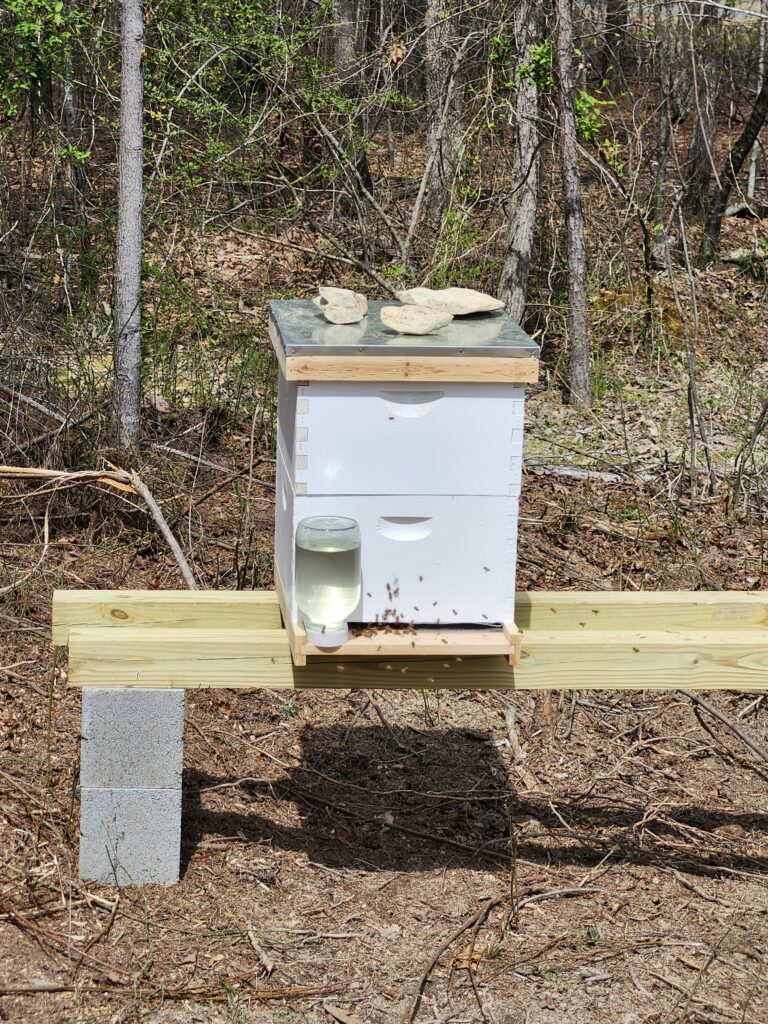
My nucs finally arrived and it was pickup day. I installed then right next to my swarm hive on the stand I made back in March. Now I had a full on apiary. I was so excited. I couldn’t wait to do my first inspection. I was feeding like I was told and I spent many hours just watching them.
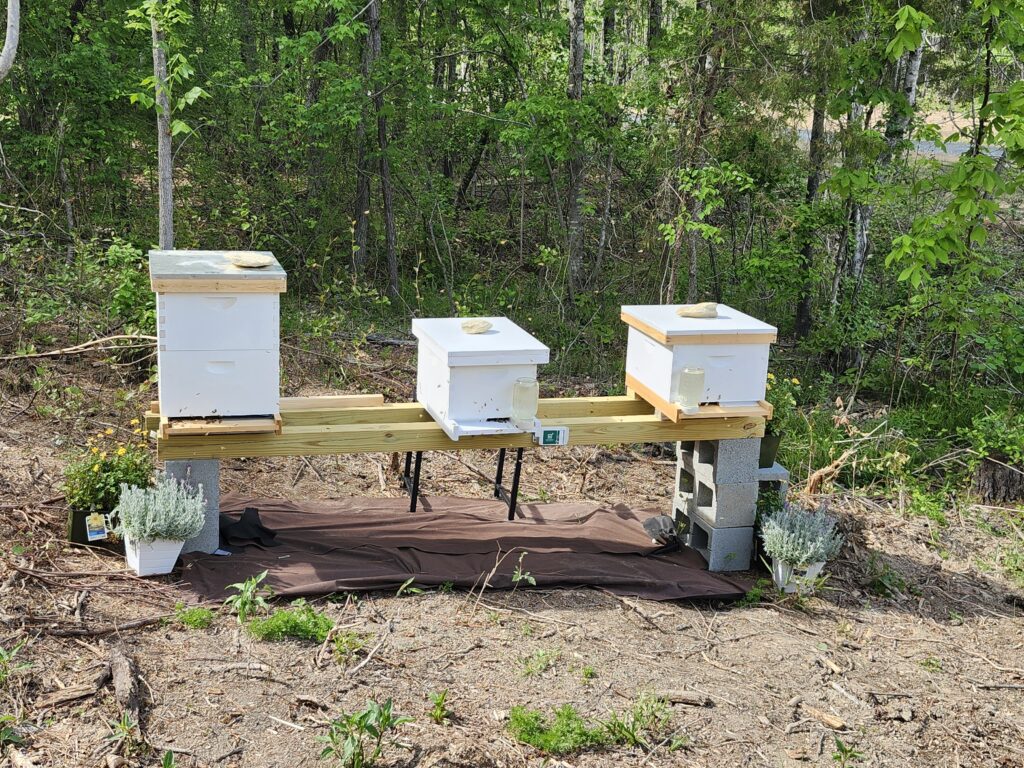
I still felt so ill-prepared. I questioned and second guessed my every decision. I asked questions to other beekeepers and got multiple conflicting responses. If you ask the same question to 10 beekeepers, you will get about 9 different responses. It can be frustrating. I know I made mistakes. Mistakes that set my bees back or significantly disrupted their flow. Thankfully, the bees just kept doing what they do best. They would restart or rebuild and just shrug it off as if to say, “could you please stay out of way, I got this.”
Summer came and it became evident that my Swarm Hive was far outpacing the nucs. I had honey! I need to collect frames. My mentor, allowed me to use his extracting equipment in exchange for helping him extract his honey. It was a great trade off. I ended up with 2.5 gallons of honey! Unreal to me that only 6 frames equaled that much honey. At the end of the summer, I made one more collection and got almost another 2 gallons. My first year as a beekeeper, I collected almost 5 gallons of honey! Those swarm girls really worked hard. I still cant believe I ended up with any honey the first year, let alone that much. It blows my mind how these tiny insects do so much. Even with my blunders, they still outproduced my mistakes. Every time I went to inspect my hives I can pinpoint a mistake and say how I could have done that differently. I can’t say how many times I look back and think to myself that I shouldn’t have any hives right now, let alone be collecting honey. I am amazed at how these bees keep doing what they do.
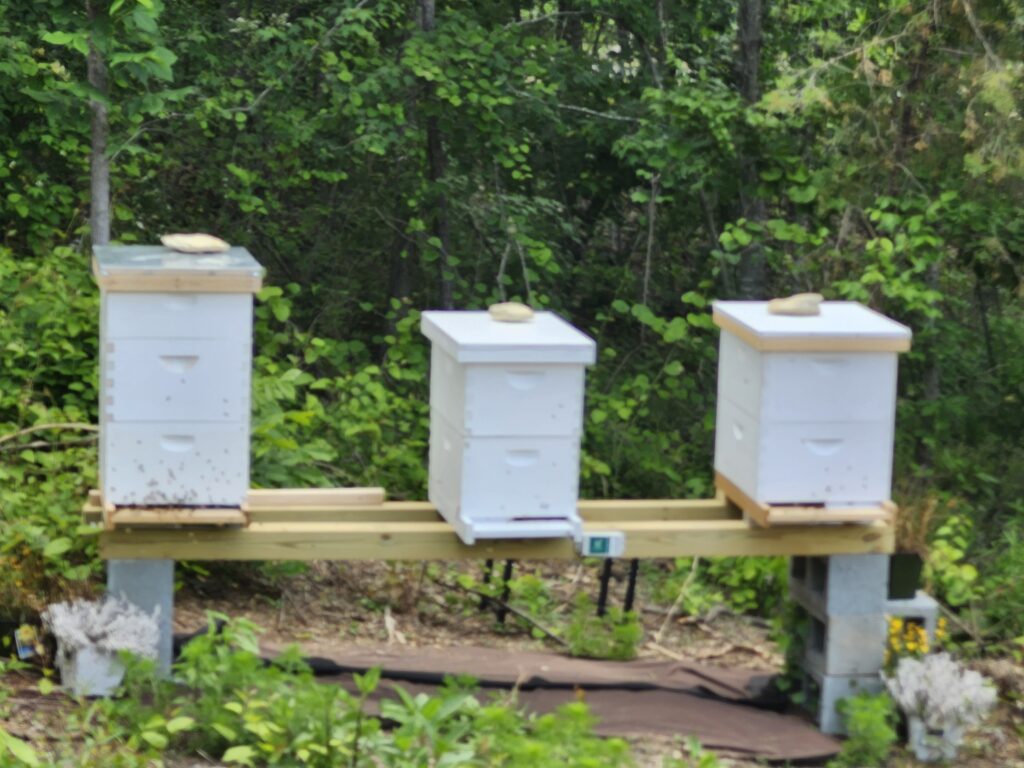
Fall came and I attempted my varroa counts and treatments. This allowed for more screwups and more work for the bees to correct. I got really worried that a mistake this late in the year would leave them disabled and cause them to not make it through winter. Then the first cold snap of the season hit. I was really stressed about them girls. I ended up not being able to check on them for several weeks and all I could think was, they’re dead. I just know it. I was finally able to go check on them but it was still rather cold. No visual activity outside the hive and my sensors were showing a less than ideal temp inside the hive. I put my ear up to the side of the hive and listened. At first I didnt hear anything. I listened closer. There it was. I slight buzzing sound. They were alive. All three hives were alive. That didnt mean they were thriving, just surviving. When it warmed up again, it really warmed up. Thank you NC. The bees were on the move. I saw lots of activity and the scales were showing an increase in hive weight. I made sure they had additional resources and options. I applied fondant and set out concentrated sugar water feeders if they wanted it. It was so good to see them buzzing around. Again I was amazed. They seemed to be a healthy colonies. I am beyond blessed to have my three hives still going, and dare I say, semi-thriving, in January. We still have the coldest part of winter to go and their food stores may be tested if it stays too cold for too long, but we are still having some intermittent 60 degree days in January. My sincere hope is that all 3 hives make it until spring when they can start foraging again.
Until then, I am making changes to the bee yard and preparations to expand my apiary for 2026. I have learned a few new lessons and will keep learning how to be a better keeper for my bees. I am really glad I took this leap. I can’t wait to spend more time with my bees in bee yard. I’m sure I will make more mistakes and learn more lessons the hard way, but hopefully the bees will continue to be forgiving.